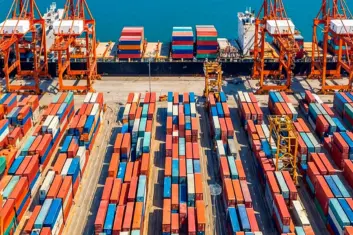
Beyond Waiting Time: The Hidden Cost of Gate Congestion

Beyond Waiting Time-image

Beyond Waiting Time: The Hidden Cost of Gate Congestion

It’s 10 a.m. on a Tuesday and the queue outside the terminal gate is already stretching past the holding area. Drivers are idling, gate clerks are working through exception after exception and the operations team is fielding calls asking why trucks aren’t moving faster. By early afternoon, someone will point to the queue and call it a gate problem. But anyone who has spent time inside terminal operations knows the queue is rarely where the story starts — or ends.

Terminal gate congestion is usually treated as a visibility problem at the perimeter: too many trucks, not enough lanes, slow processing. In reality, it’s frequently a symptom of how gate activity connects — or fails to connect — with yard planning, equipment deployment, cargo availability and vessel schedules. Understanding that chain is the difference between fixing a queue and fixing a terminal.

What Causes Gate Congestion at Terminals?

Port gate congestion rarely comes from a single cause. It tends to build from several factors overlapping at once:

Individually, most of these are manageable. Together, they compound. A terminal with a well-staffed gate can still see queues form if yard slots aren’t confirmed in time, or if equipment isn’t positioned to service an incoming truck the moment it clears the gate.

The Visible Cost: Truck Waiting Time

Truck waiting time is the first thing anyone measures and for good reason — it’s visible, it’s easy to report and it directly affects the people sitting in cabs outside the fence. Longer queues translate into longer truck turnaround time at ports, higher fuel consumption for idling vehicles, lost productivity for drivers and trucking companies and missed delivery windows further down the supply chain.

Terminal operators feel this too, through higher gate operating costs and growing dissatisfaction among transporters and cargo owners who expect predictable service levels.

But waiting time is a measurement, not a diagnosis. It tells you congestion exists. It doesn’t tell you why and it doesn’t capture what’s happening on the other side of the gate.

The Hidden Cost: What Happens Inside the Terminal?

This is where the real story of gate congestion unfolds — along the chain from Gate → Yard → Equipment → Cargo → Vessel → Customer.

Yard congestion: When truck arrivals aren’t synchronized with cargo positioning, the yard absorbs the pressure. Containers meant for quick turnaround end up stacked behind others, slot allocation becomes reactive and yard planners spend more time resolving conflicts than optimizing space.

Equipment utilisation: A truck cleared through the gate still needs equipment — a reach stacker, RTG, or terminal tractor — ready and positioned. Congestion at the gate can mean equipment sits idle waiting for the next truck, or gets redirected mid-task, adding unnecessary movements and reducing overall equipment utilisation.

Cargo flow: Delays at the gate ripple into how quickly cargo can move through receiving, staging and loading sequences. Cargo availability and movement timing become harder to predict, particularly for terminals handling time-sensitive or high-throughput cargo.

Labour productivity: Every exception — a missing document, a mismatched booking, an appointment dispute — pulls staff away from planned work into manual intervention. Unpredictable workloads make it harder for operations teams to plan shifts and allocate resources with confidence.

Vessel operations: In terminals where truck and cargo movements feed directly into vessel loading sequences, gate-driven delays can affect how efficiently vessel operations proceed, depending on how tightly the two are linked.

Customer experience: Shipping lines, cargo owners and transporters experience the downstream effect as reduced visibility and less predictable service — even when the queue itself has cleared by the time they ask about it.

The extent of this impact varies. A terminal handling mostly long-dwell cargo will feel it differently than one built around fast transshipment. The point isn’t that every terminal suffers identically — it’s that gate congestion rarely stays at the gate.

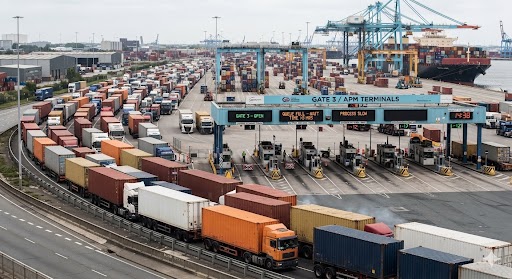
How Gate Congestion Impacts Terminal Efficiency

Treating the gate as a standalone function is where many congestion strategies fall short. Gate operations at ports interact constantly with yard planning, equipment dispatch, cargo availability, appointment scheduling and resource planning. A terminal that only tracks how long a truck spends at the gate is missing the operational visibility needed to understand why that time is what it is and what it’s costing elsewhere. Terminal efficiency depends on seeing the gate as one node in a connected system, not an isolated checkpoint.

Why Traditional or Disconnected Gate Operations Struggle

Manual and paper-based gate processes have served terminals for decades and many still function adequately at lower volumes. The strain shows up when gate, yard, cargo and planning processes rely on separate systems or heavy manual coordination: repeated data entry, multiple verification points, limited real-time visibility and exception handling that depends on someone noticing a problem rather than being alerted to it. The issue isn’t that traditional systems are inherently ineffective — it’s that disconnected processes struggle to keep pace with variable truck arrivals and shifting yard conditions.

What Modern Gate Operations Should Look Like

Connected digital gate operations extend beyond automating individual tasks. The value comes from linking gate activity to what’s happening in the yard, on equipment and in cargo planning — in real time. This typically involves digital gate appointments, automated processing with OCR/ANPR and RFID identification, digital documentation, real-time vehicle tracking, automated validation checks, yard-location integration, exception alerts and dashboards that give planners a live operational picture. Gate automation reduces manual steps, but its greater value lies in feeding accurate, real-time data into broader port gate management and terminal planning.

KPIs to Measure Gate Performance

Truck waiting time alone gives an incomplete picture. A fuller view includes:

KPI What It Helps Measure
Truck turnaround time Overall truck processing efficiency
Average truck waiting time Queue and congestion levels
Gate transaction time Speed of gate processing
Trucks processed per hour Gate throughput
Queue length Peak congestion
Gate utilisation Capacity utilisation
Peak-hour congestion Demand concentration
Automated transaction rate Level of process automation
Exception rate Operational disruptions

Tracked together, these KPIs reveal the relationship between gate performance and wider terminal performance — not just how long a truck waited, but why.

From Reactive Gate Management to Predictive Operations

Data from gate, yard, equipment and cargo systems can also support forward-looking planning. By analyzing expected truck arrivals, historical traffic patterns, yard capacity, cargo availability and current terminal conditions, planning teams can anticipate pressure points before they become queues. This doesn’t eliminate congestion — arrivals will always carry some unpredictability — but it shifts operations teams from reacting to a queue toward planning around known and probable conditions.

The Technology Requirement: Connected Terminal Operations

Reducing gate congestion isn’t primarily about adding lanes or processing trucks faster at the booth. The bigger requirement is connecting Gate + Yard + Equipment + Cargo + Planning + Real-Time Visibility, so that a delay in one area is visible to the teams managing the others before it compounds.

How Infyz Can Help

This is the environment Infyz is built for. Infyz provides AI-powered, configurable technology for port, terminal, shipping and logistics operations, with the gate positioned as one connected part of a larger operational picture rather than a standalone checkpoint.

Its Terminal Operating System, iTOMS, connects gate processing, yard allocation, equipment dispatch and cargo tracking within a single operational environment, giving terminal teams shared visibility instead of siloed data. iPlanXpert supports planning and resource coordination, helping teams align expected truck and vessel activity with available yard and equipment capacity. Within iTOMS, digital gate workflows handle vehicle processing and validation, while yard management capabilities keep cargo positioning and slot allocation aligned with what’s arriving at the gate.

A connected flow typically looks like: Truck Arrival → Gate Processing → Validation → Yard Allocation → Equipment Assignment → Cargo Movement → Real-Time Tracking → Operational Dashboard. Linking these stages helps terminal teams spot bottlenecks earlier, coordinate resources with less manual back-and-forth and make planning decisions based on current conditions rather than after-the-fact reports.

Conclusion

Gate congestion is rarely just a queue outside the terminal. More often, it’s an early signal of how well — or how disconnected — gate, yard, equipment, cargo and planning processes are working together. Addressing it means looking beyond truck waiting time to the operational visibility that connects these functions across the terminal.

Want to see how connected gate, yard and terminal operations can improve visibility and efficiency? Explore Infyz’s Terminal Operating System.

Frequently Asked Questions

What is terminal gate congestion?

It’s a buildup of trucks at a terminal gate caused by processing delays, appointment gaps, or limited coordination between gate, yard and equipment operations.

A combination of factors — unplanned arrivals, manual processing, yard or equipment availability and limited real-time visibility between gate and yard teams.

It can extend into yard planning, equipment utilisation, cargo flow, labour workload and, depending on integration, vessel loading schedules.

By improving appointment management, digitizing gate processing and connecting gate data with real-time yard and equipment availability.

Automation speeds up individual transactions, but its greater impact comes from feeding accurate data into yard and planning systems for faster coordination.

Yes — an integrated Terminal Operating System connects gate, yard, equipment and cargo data, giving teams the visibility needed to anticipate and manage congestion rather than only react to it.