Introduction
Choosing among TOS providers is no longer a back-office IT decision. It shapes berth productivity, customer satisfaction and a terminal’s ability to compete for cargo volumes. This guide walks through what a TOS actually does, how the major global providers compare, what’s happening regionally and how to evaluate a vendor before signing a contract.
What is a Terminal Operating System (TOS)?
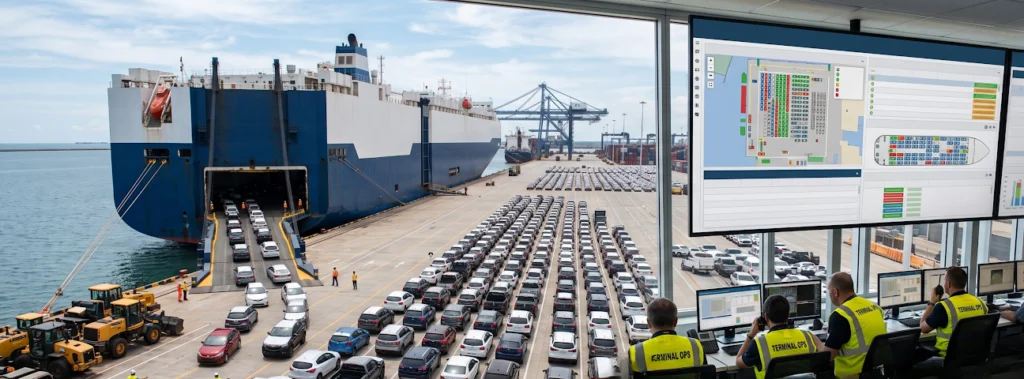
A Terminal Operating System is the software backbone that plans and controls operations inside a port or terminal. It manages vessel and berth planning, yard allocation, gate movements, equipment scheduling and the data exchange with shipping lines, customs authorities and inland logistics partners.
In practical terms, a TOS answers questions like: Which berth should this vessel use and when? Where should this container be stacked so it’s easy to retrieve later? Which crane or reach stacker should handle the next job? Modern Port Terminal Operating System providers have expanded this scope well beyond containers, adding modules for bulk, breakbulk and multi-purpose cargo handling.
Why Choosing the Right TOS Provider Matters
A TOS isn’t a plug-and-play utility. It’s a long-term operational partner. The wrong choice can mean:
Current Trends in Port Digital Transformation
Ports worldwide are moving in a few consistent directions, though the pace varies by region and should be verified against sources like UNCTAD’s Review of Maritime Transport or Drewry’s port research for current figures:
Key takeaway: Selecting a TOS provider is closer to choosing a long-term infrastructure partner than buying software off a shelf. Evaluate for the next decade, not just the next contract cycle.
Leading TOS Providers Around the World
Here’s an objective look at some of the notable names in the space. This isn’t a ranking — market position varies by region, cargo type and terminal size — but a snapshot of how different vendors approach the problem.
When comparing global TOS providers, weigh cargo-type support and integration flexibility more heavily than brand recognition alone. A vendor that dominates container terminals may not be the best fit for a multi-purpose or breakbulk-heavy port.
When comparing global TOS providers, weigh cargo-type support and integration flexibility more heavily than brand recognition alone. A vendor that dominates container terminals may not be the best fit for a multi-purpose or breakbulk-heavy port.
Regional Overview of TOS Providers
TOS Providers in India
India’s port sector is going through a sustained digital push, tied to national logistics efficiency initiatives and major terminal expansions along both coasts. Buyers here often prioritize cost-effective cloud deployment, multi-cargo flexibility (given the mix of container, bulk and breakbulk traffic at many Indian ports) and vendors who understand local customs and EDI requirements.
TOS Providers in Europe
European terminals tend to have mature legacy systems already in place, so the conversation is often about modernization and integration rather than greenfield implementation. Regulatory alignment (customs union requirements, emissions reporting) and interoperability with pan-European port community systems are common selection criteria.
TOS Providers in the US and North America
US and Canadian terminals have historically leaned on a small set of established vendors, with strong emphasis on rail integration given the density of intermodal freight corridors. Labor agreements and equipment automation levels also shape which TOS features matter most.
TOS Providers in the Middle East
Gulf ports have invested heavily in infrastructure and are frequently early adopters of automation and AI-driven planning, partly driven by ambitious national logistics and diversification strategies. Cloud-native, API-first TOS providers tend to find receptive buyers here, especially at newer or expanding terminals.
TOS Providers in Southeast Asia
Southeast Asia’s mix of large hub ports and smaller regional terminals creates demand for TOS providers that can scale down as easily as they scale up. Multi-purpose terminal software that handles mixed cargo types is particularly relevant given the region’s diverse trade profile.
Emerging Markets (Africa, Australia and Beyond)
In Africa and parts of Australia’s regional port network, terminals are often modernizing from manual or semi-manual processes directly to cloud-based systems, skipping some of the on-premise legacy stages seen elsewhere. This creates opportunities for lighter, faster-to-deploy TOS solutions.
Features Every Modern TOS Provider Should Offer
Cloud vs On-Premise TOS
AI in Terminal Operating Systems
AI-powered TOS platforms are moving beyond simple rule-based automation into predictive and adaptive capabilities:
These capabilities are still maturing across the industry and adoption levels vary significantly by terminal size and budget — it’s worth asking any vendor for concrete deployment examples rather than taking AI claims at face value.